
Digital Defense Against the Dark Arts
Join me now in the "Zoom Room of Requirement"

My spouse and I are big Lord of the Rings as well as Harry Potter fans. We love the books and we love the movies. Over Christmas break I started re-reading the Harry Potter book series… This evening we finished watching (AGAIN) the sixth film in the series, “Harry Potter and the Half Blood Prince.” (2009) As a media literacy advocate and current media literacy classroom teacher, I feel I should be teaching a digital form of “Defense Against the Dark Arts” to my students as well as to adults these days.
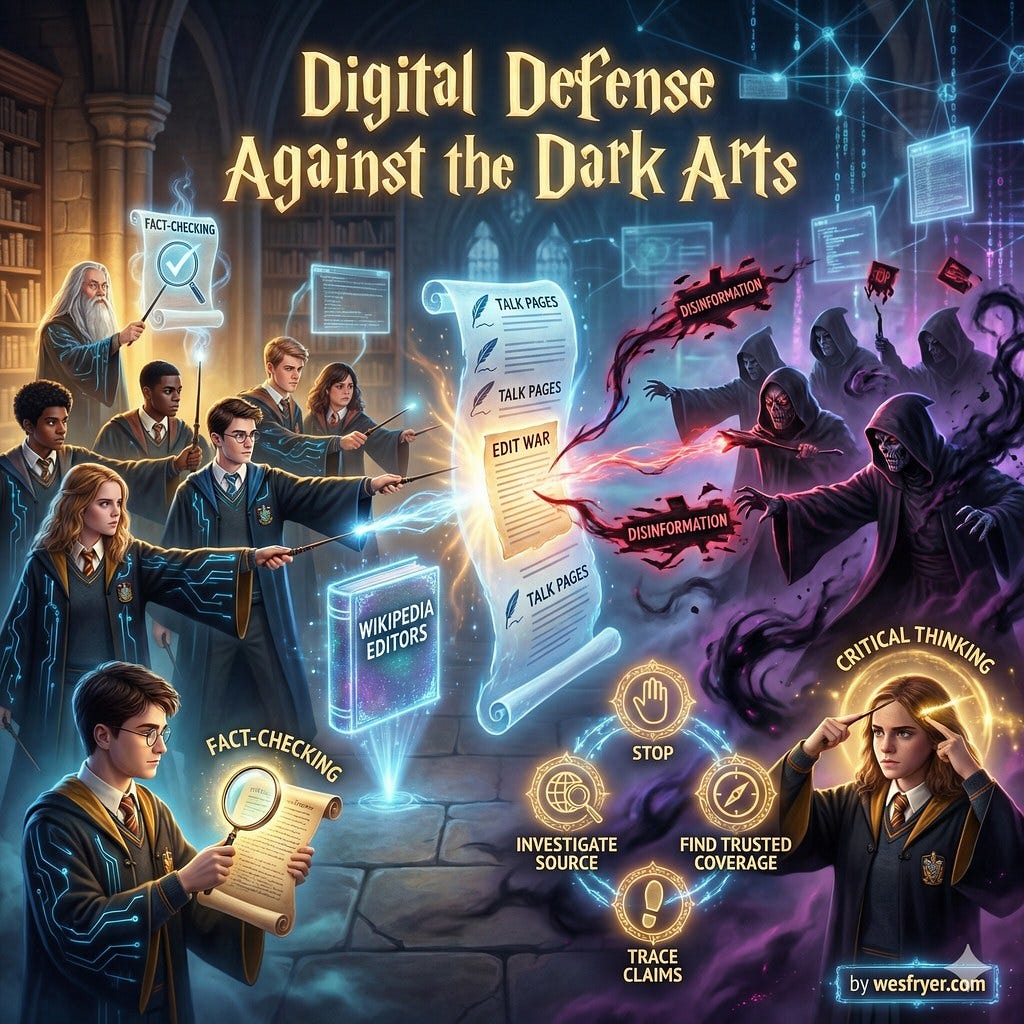
The recent article, “The Wikipedia wars” by authors of EUvsDisinfo, highlights the literal cyberwar which continues to be waged by Russian-aligned threat actors against truth, history, the citizens of our planet, and specifically the editors of WikiPedia.
Vladimir Putin, the de-facto leader of Russia since 2000, wants to rewrite history on his own terms. The 47th elected President of the United States is following suit in many ways in our federal parks. But on WikiPedia, ongoing “edit wars” by Russian agents seek to change historical language specific to many of Russia’s geographic neighbors, including the Baltic States. According to EUvsDisinfo researchers:
One recurring tactic has been changing the birthplaces of hundreds of Estonian public figures from ‘Estonia’ to ‘Estonian SSR, Soviet Union’, despite the legal consensus that Estonia was occupied, not legitimately incorporated, by the USSR between 1940 and 1991. This is not a minor wording issue. Calling Estonia a ‘Soviet republic’ supports the Russian claim that the Baltic states voluntarily joined the USSR and directly contradicts the position of Estonia, the EU, NATO countries, and international law.
These repeated edits of WikiPedia articles by bad actors / threat actors are even more challenging today because of the rise of AI search and AI overviews. Back in August 2025 I facilitated a webinar for the Media Education Lab titled, “Searching with AI – Can We Trust the New Gatekeepers?”
Internet search skills of the 2000s and even 2010s are no longer sufficient today. Media literacy and AI literacy requirements should include “Defense Against the Dark Arts” strategies, like “Fact Checking with AI Superprompts.”
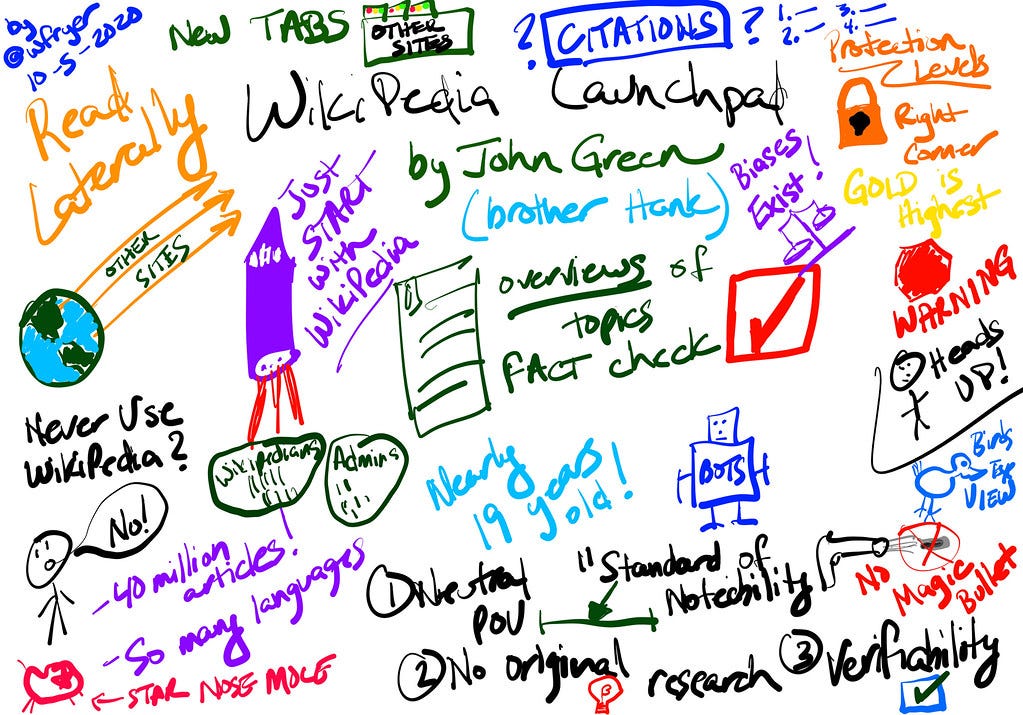
One of my favorite lessons in my my middle school media literacy class is, “LaunchPad WikiPedia.” In the lesson, my students practice their sketchnoting skills using their iPads and styluses, watching and looking for key takeaways in John Green’s 2019 video, “Using Wikipedia: Crash Course Navigating Digital Information #5.”
Among other things, I hope my students in this lesson learn how the TALK PAGES of WikiPedia are digital spaces where online debates over facts, wording, citations, and other elements of WikiPedia articles are hashed out and resolved. WikiPedia celebrated its 25th anniversary last month in January 2026, and it stands out in many ways as an exemplar not only for web publishing, but also because of it’s community which polices, protects, nurtures and grows its article collection in so many languages.
Some conservative voices love to bash and disparage WikiPedia, making debates over bias yet another front in our ongoing culture war. Media literacy DOES mean fact checking, investigating sources, and uncovering bias. But media literacy should never be considered a partisan issue, any more than pursuing a college education or advanced degrees should be considered “suspect” and a reason to dismiss a source’s credibility. Those were opinions advocated by Mao Zedong in the Chinese Cultural Revolution. They do not belong in twenty-first century discourses on ideas.
To gain a better understanding of how “digital defense against the dark arts” skills are needed by ALL Internet users today on our planet, I recommend the following podcasts:
Angry Planet (especially their January 16, 2026 episode, “Online Culture is the Whole Culture.”)
They are a few years old now (from 2019-2020) but YouTuber Destin Sandlin (@SmarterEveryDay) created a fantastic series of videos he put into a YouTube playlist, “Deep Dive – Social Media Misinformation.”
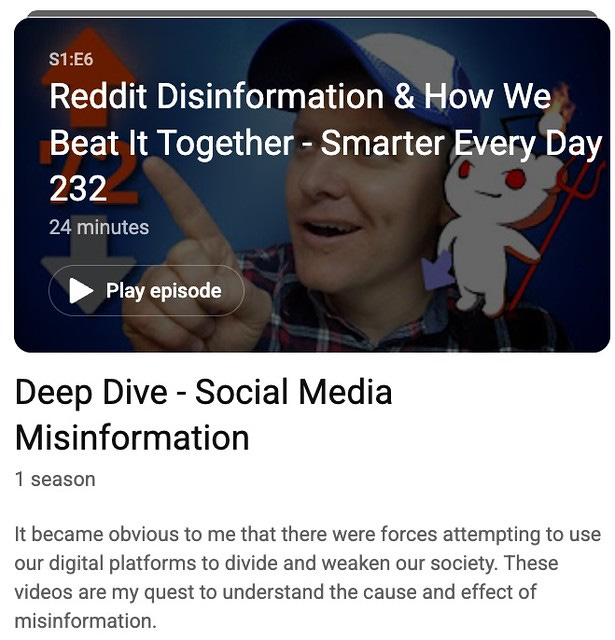
My favorite from that series, shared in March 2019, is “Manipulating the YouTube Algorithm.” Even though this video is six years old now, I think the threat actor dynamics which Destin highlights are largely UNKNOWN to most Internet users and U.S. citizens today. Most folks just don’t realize we all need “defense against the dark arts” skills in digital spaces.
If you’ve read to the end of this post, congratulations. Now go back and add the videos I’ve referenced here to your own YouTube Watch List / media queue… and bookmark my “News with Wes Fryer” website!
If you’re interested in more links and resources on these topics, please check out my “Conspiracies and Culture Wars” Media Literacy inquiry project, which I started with my Chicagoland colleague, Brian Turnbaugh.
Hat tip to Brian for sharing the article, “The Wikipedia wars”, which was the original catalyst for this blog post.
Good luck developing your own “digital defense against the dark arts” skills. If I can help further, please let me know.
I also shared this post on my blog, "Moving at the Speed of Creativity" https://www.speedofcreativity.org/2026/02/08/digital-defense-against-the-dark-arts/