

Election Day is Tuesday, November 3rd, and what we see this week is shaped by feeds, algorithms and AI more than ever. So who is helping students (and the rest of us) ask what’s showing up in front of us, and why? It’s been about six months since my last roundup, so here are recent videos, projects and tools I’ve shared, plus a webinar this Monday you should join with me!
In this Roundup Edition:
MediaEd Club: Voices Beyond the Textbook (November 2nd)
Vibe Coding Classroom Spinners and Feedback Pages
Media Creation Tutorials: Video, Audio and Family Stories
Your Feeds, Your Algorithms
InteractiveBallot.com: A Hyperlinked Ballot
AI in Education on the 2027 TED Stage
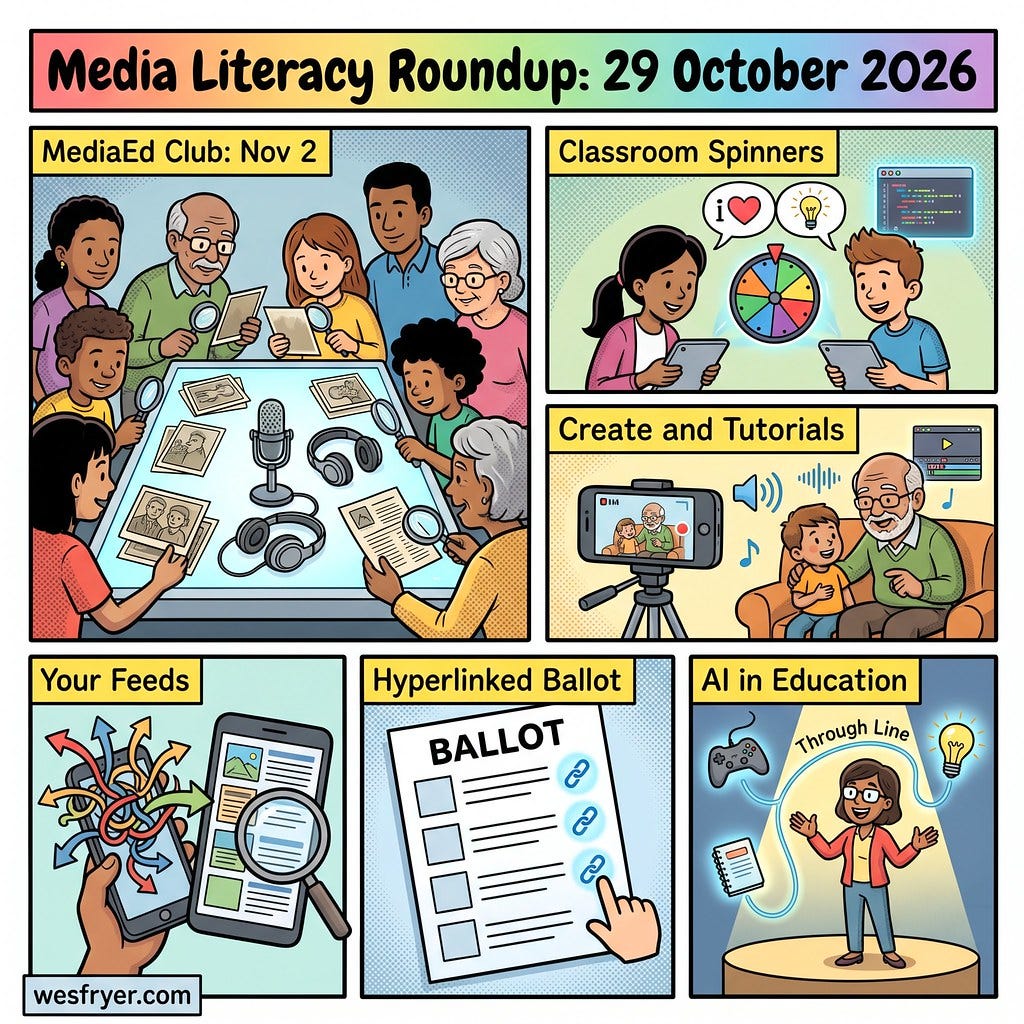
1. MediaEd Club: Voices Beyond the Textbook (November 2nd)
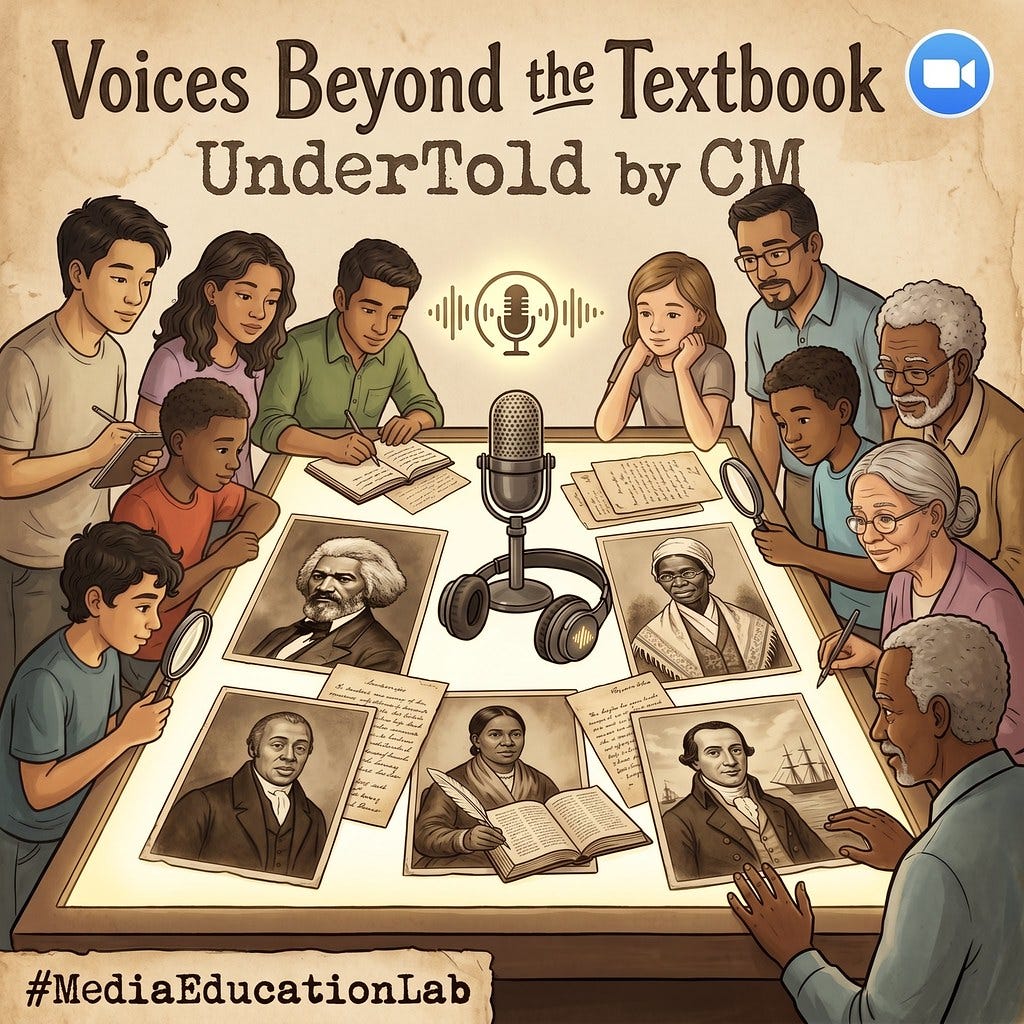
One of my favorite parts of each month is facilitating a free noontime (ET) Zoom webinar for the MediaEd Club of the Media Education Lab, usually on the first Monday. Our next meetup is Monday, November 2nd at noon ET: “Voices Beyond the Textbook” with Crystal Marie, writer, producer and narrator of the UnderTold by CM podcast.
Black history is increasingly shared through podcasts, short videos and AI-generated images, and not all of it holds up. How do you share a lesser-known life without creating a new myth? We’ll listen to episode excerpts, look at how Crystal Marie chooses sources and guests and tests popular myths, and go behind the scenes at her production tools. The event page invites you to “Bring a story you want to tell responsibly.” Recommended media is listed there too.
Recent MediaEd Club webinars (all recorded and archived on YouTube):
Becoming an Apocaloptimist (5 Oct 2026)
AI and Authorship (14 Sept 2026)
Vertical Video Literacy (3 Aug 2026)
AI and Human Dignity (6 July 2026)
2. Vibe Coding Classroom Spinners and Feedback Pages
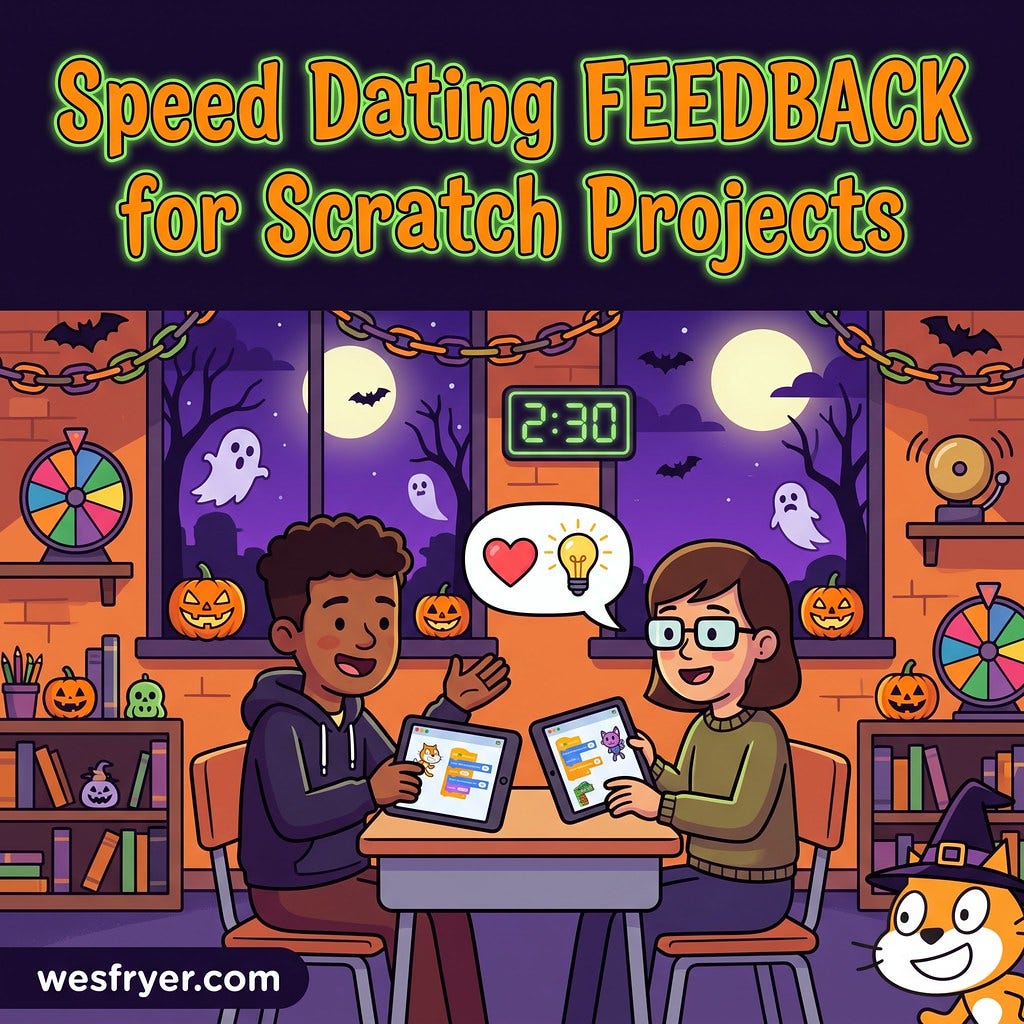
To help my Computer Programming students practice giving feedback face to face on their Spooky Scratch Stories, I vibe coded a one page web app: Scratch Project Feedback Speed Dating. (I changed the included student names to generic / fictitious names for this published version.) There are four rounds with a new partner each time. One student shares, and the other plays the project and whispers back a favorite part and one suggestion. The app reveals all the pairings at once, runs the countdown, rings the bell, and adds a “guest partner” when the class count is uneven. Read the full story on Substack or fork it from GitHub.
I started from a Spooky Story idea spinner I’d built for the same project, and that’s what I love about vibe coding for the classroom. Instead of hunting for a website that almost fits, I describe exactly what my students need, test it with them, and refine it. The result is a single HTML file with no accounts and no installs, and nothing leaves the browser.
I have much more to share about this! Many of these tools come out of a “design, create, share” workflow in a Claude project I use (here’s an example conversation), and you can browse more projects on my GitHub. Next I want to write about using AI-assisted code to download student work that includes URLs and webpages, and to filter learning journal results.
3. Media Creation Tutorials: Video, Audio and Family Stories
Media literacy includes creating media, not just analyzing it. Here are a few short tutorials I’ve shared recently for making better video, cleaner audio and family history recordings:
1. How to Use a Camera Clamp on a Tripod for Steady Phone & iPad Video (28 Oct 2026, 2.5 min)
2. How to Create a New Adobe Premiere Project & Import Clips from a USB Flash Drive (22 Sep 2026, 3.5 min)
3. Enhance Video Audio for Free: Adobe Podcast Enhance + QuickTime Workflow (9 Sep 2026, 7 min)
4. Your Feeds, Your Algorithms
In August I gave a lightning talk at the Civics of Technology 2026 conference, whose theme was “Against Tech Hype.” My question: how can we reclaim our attention from feeds designed by someone else? You can watch the 25 minute video on YouTube, browse the linked slides, or read the full post with every resource I mentioned.
I argued that open idea sharing on the open web is still valuable, and that AI-assisted coding can help us build our own tools. Two I showed: PodCommons, an open podcast index (400+ podcasts and 4,000+ episodes when I presented), and News with Wes, a chronological feed of the newsletters I subscribe to. Both are open source on GitHub. What would you build to see more of what you trust?
5. InteractiveBallot.com: A Hyperlinked Ballot
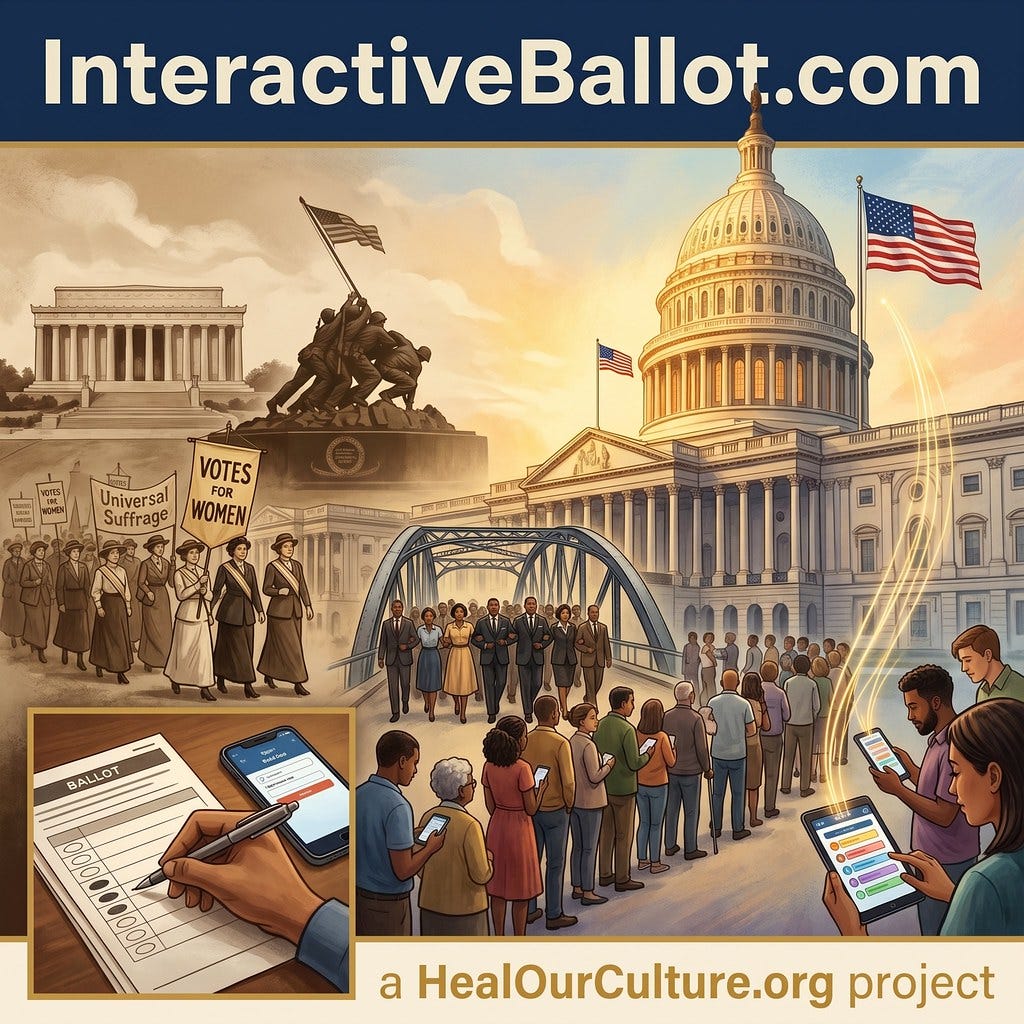
Several weeks before our upcoming midterm elections, I updated my InteractiveBallot.com project. It is a free, nonpartisan prompt that turns your official sample ballot into a voter guide with a link to every candidate. My view: a hyperlinked ballot should be normal, not a novelty.
I shared and wrote about this website and project over on my “Heal Our Culture” Substack. I created this project because this is something I’ve wanted myself as a voter seeking to be better informed: A hyperlinked ballot that lets me quickly visit the official campaign websites of different candidates.
Check out InteractiveBallot.com, share it with others, and please let me know what you think! It’s not perfect but it’s getting better…
6. AI in Education on the 2027 TED Stage
TED and Google’s “AI in education idea search” are looking for educators who actively use AI and have firsthand experience designing approaches that make a difference. To apply, you first attend an interactive webinar, and pitches are due November 15, 2026. Up to five educators will be selected by December 31st to share ideas on the TED stage in San Diego in early March 2027.
My proposed through line: “AI can help kids build games they couldn’t alone, but only thorough documentation can reveal thinking and learning.” I shared my 58 second pitch on YouTube, and my full post explains the process. Webinar finishers are also invited to the TED-Ed Hub, which you can join even without attending. Fingers crossed!
Thanks for reading this edition of my Media Literacy Roundup! I’ll try to share more often. If you’re not already, please subscribe to The EdTech Situation Room, the podcast I co-host with Jason Neiffer. More links to connect and learn with me are on wesfryer.com/after.
Happy Halloween, and stay media literate this election week!
AI Attribution: I used Claude to draft this roundup from my links and notes, then edited it.
"A hyperlinked ballot should be normal, not a novelty" is so right/one click to a candidate's own site gets you their words instead of whatever an ad wanted you to feel about them. To answer your question in the feeds section, I'd build a filter that asks of every post whether it wants me to feel something or understand something, and only lets the second kind through lol